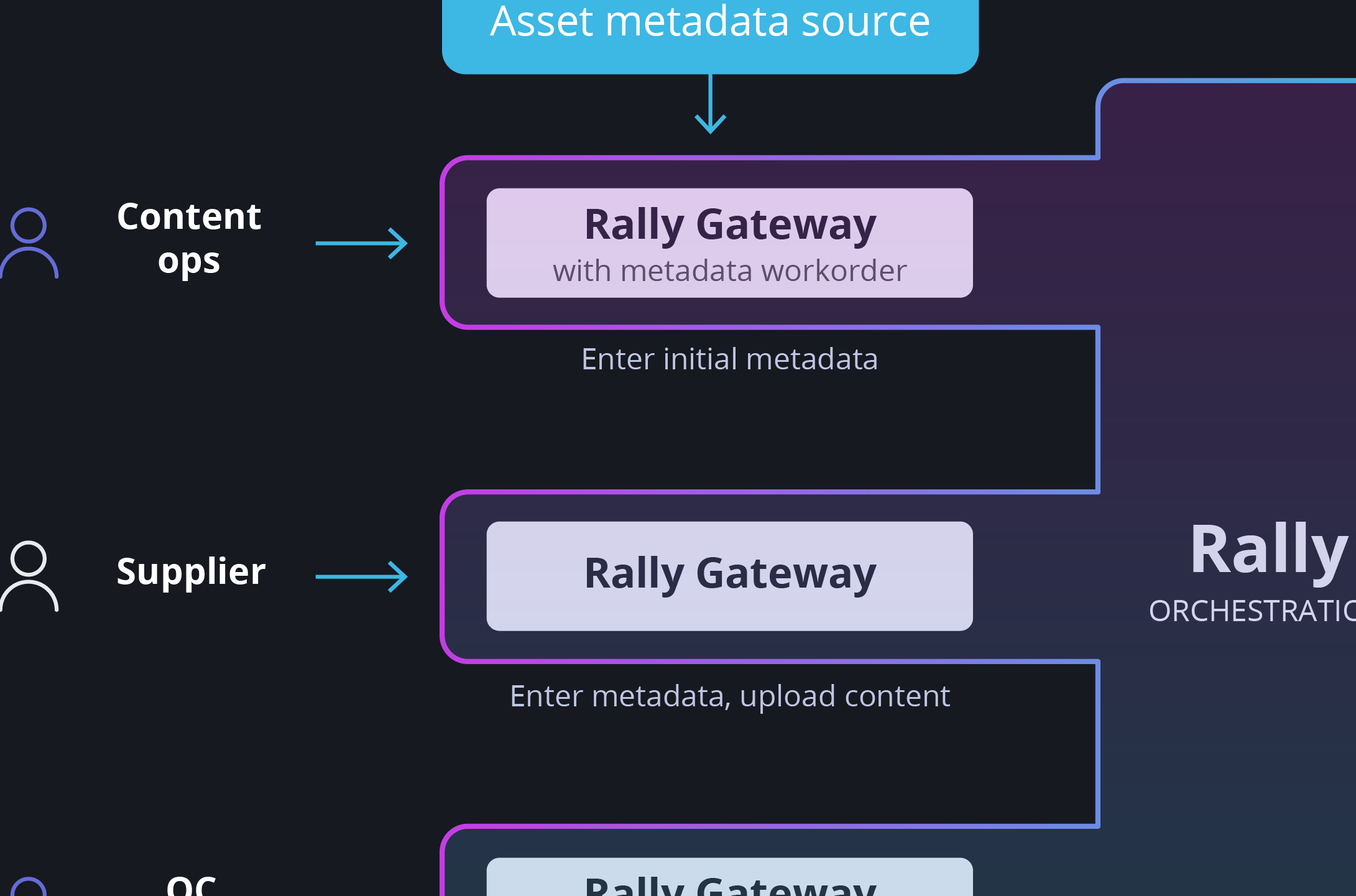
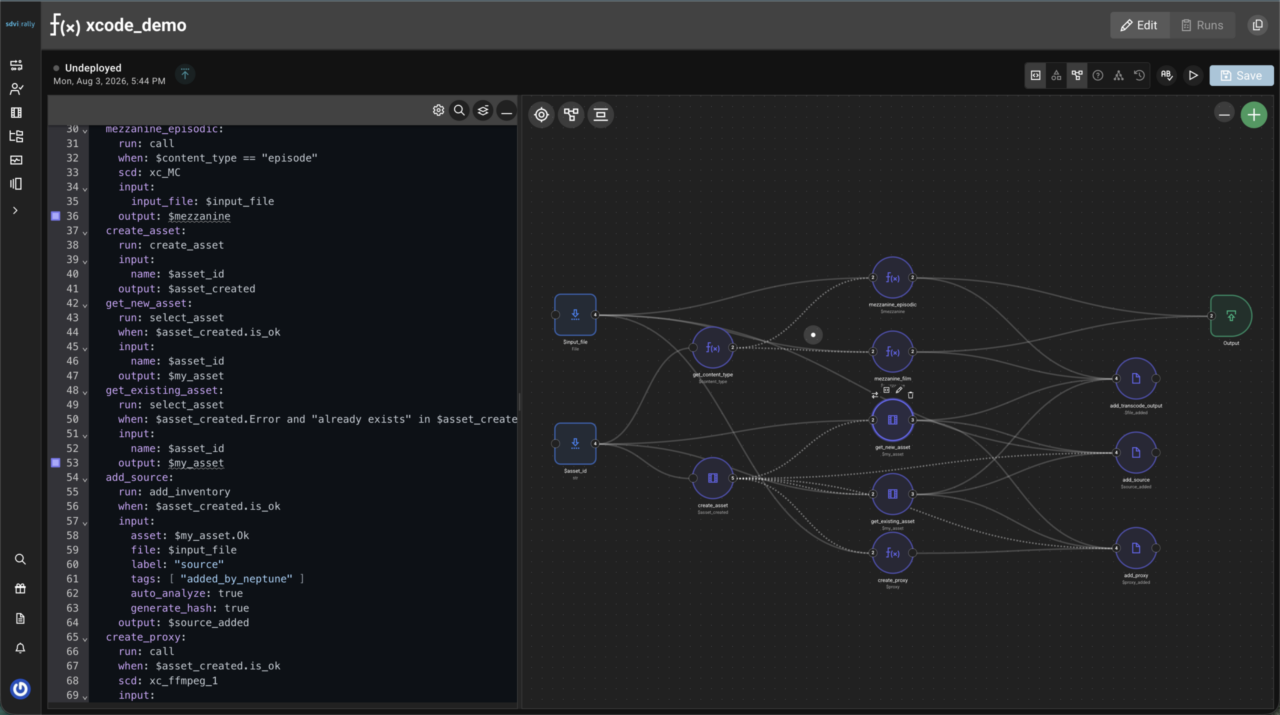
When media organizations talk about becoming “agile,” they usually mean being able to respond quickly to new opportunities without having to overhaul their operations every time something changes. Whether dealing with a new delivery spec, a different partner, or a new format requirement, it shouldn’t take weeks to redesign workflows. To achieve that kind of responsiveness, the media supply chain needs to be flexible by design. A truly agile media supply chain must provide access to a wide range of tools, where components can be swapped as needs evolve, and usage is scaled up or down without locking into fixed infrastructure – and the associated costs.
 Infrastructure That Wakes Up When The Work Does
In a cloud-native setup like Rally, infrastructure works differently from traditional media processing environments. When a silo is idle, provider instances are turned off. You won’t find any always-on compute running in the background. As soon as assets enter the system and a supply chain is set in motion, Rally spins up the provider instances needed for those specific tasks and only those tasks.
 Scaling Intelligently, Not Aggressively
In real-world deployments, supply chains can be complex and variable. Rally is always monitoring job queue lengths, determining how many providers are active, and reviewing recent job history to decide whether it should wait for capacity to free up or instead spin up more instances. When making scaling decisions, Rally considers instance startup time, workload concurrency, and expected completion times. Ongoing assessment prevents long queue backups and unnecessary instance creation. The aim isn’t just to scale aggressively, but to do so smartly.
 Cost Awareness
Cost control is integrated into Rally’s design. Elastic pools can be set with minimum and maximum thresholds, expanding during bursts and gradually returning to baseline as demand stabilizes. Instances can be tagged and isolated for specific workflows, with additional instances added as needed. When Rally users have their own licenses, those are prioritized before using extra capacity. The result is a supply chain that adapts in real time, both technically and financially, aligning infrastructure use with operational demand.
—
Interested in exploring new Rally applications and workflows? Get in touch and start the conversation.