Last month, I wrote about how Rally manages infrastructure so you don’t have to — specifically, how the tight integration of orchestration and resource management eliminates the operational overhead that media companies would otherwise have to handle themselves. This month, I want to zoom out a bit.
There’s been a lot of recent discussion — across LinkedIn and elsewhere — about the cost of software, cloud usage, and whether it’s becoming easier (or cheaper) to build and run things yourself. Some of those perspectives are compelling, particularly when they highlight how different architectural approaches can produce very different-looking bills. These conversations also point to something deeper: Not all costs are visible, and not all value shows up in the same place.
The Apples-and-Oranges Problem
When media organizations evaluate their supply chain management options, the conversation often starts with what’s easy to measure: software fees, cloud consumption, and infrastructure costs. While those numbers tell part of the story, there are additional costs to contemplate: infrastructure that has to be provisioned, systems that need to be integrated, and processes that have to be maintained.
Consider, for example, a solution that focuses primarily on orchestration. It can determine what jobs to run and when, but it relies on your team to create and manage the environment in which those jobs run. That means provisioning compute, storage, and networking resources; ensuring capacity is available; scaling infrastructure up and down; applying updates; and maintaining the overall system. Capacity is often overprovisioned to avoid bottlenecks, and infrastructure continues running even when it’s not needed. Day after day, engineering teams remain responsible for maintaining and troubleshooting the system. The result is a combination of underutilized resources and ongoing operational effort. While those costs don’t appear on any invoice, they become very real over time.
For a supply chain management platform like Rally, on the other hand, tasks such as infrastructure provisioning, capacity tuning, performance benchmarking, idle resource management, security patching, and ongoing support aren’t explicitly itemized in a monthly bill, but they’re all built in. There is no list of extras that become the Rally user’s responsibility (and added budget line items). Because everything is included, the total bill may be higher, but the total effort — time, personnel, and work — required to operate the system is significantly lower.
If the costs of running and maintaining an optimized media supply chain aren’t factored into the full picture for any given solution or platform, then any comparison will be apples to oranges. To avoid this problem, think about focusing on the outcome you’ll get rather than the price tag on any single line item.
The Full Cost of Running a Supply Chain
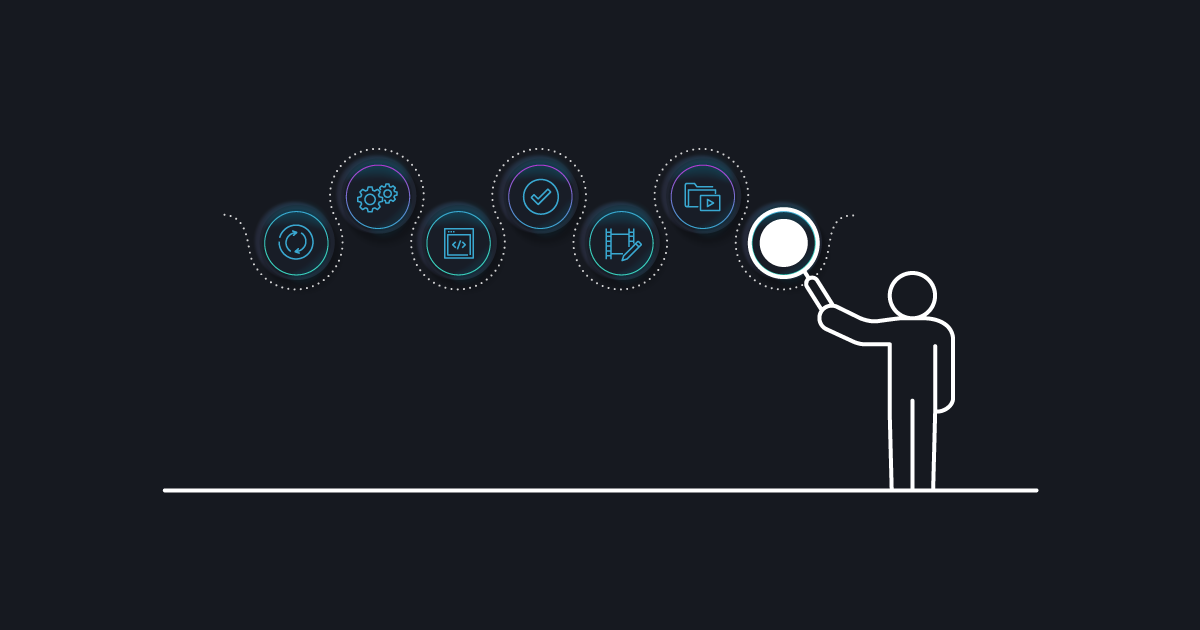
A modern media supply chain is inherently complex, spanning multiple systems, workflows, formats, and delivery requirements, often at scale. Managing that complexity yourself is possible, but it comes at a cost in time, resources, and opportunity. The full picture rarely shows up in a comparison spreadsheet. Understanding it requires looking beyond individual line items and asking deeper questions. How much engineering effort is required to operate the system? How efficiently are resources being utilized? How quickly can you scale to meet demand? How reliably can you deliver content to consumers?
And if you’re considering going one step further and taking the build-it-yourself route — an approach that may seem more appealing in light of current chatter about vibe coding — think through a few additional questions first. Who maintains the system once it’s built? When the engineer or engineers who built it move on, what’s the plan? What’s the process for keeping up with changes in underlying cloud infrastructure, integrated applications, or the codecs and formats your distribution partners require?
The larger (and most important) question: Is your company prepared to support the solution as though it’s a real software product, with engineering, QA, operations, and on-call support? For most organizations, that trade-off doesn’t make economic sense when a professional-grade platform already exists and is actively evolving to meet the demands of the industry. (That’s Rally.)
Rally was architected from the beginning around a single principle: align costs with actual usage. You pay for the assets that are actively being worked on. You pay for the processing that’s being done, in the exact moment it’s needed. Active assets cost money; inactive assets don’t. Running jobs consume resources; idle queues don’t. And across all of it, as much as possible is done for you automatically so that you can apply fewer resources to operating the supply chain itself.
Rally takes that on, managing the infrastructure, orchestrating the workflows, and optimizing the resources so your team can focus on what differentiates your business. The platform handles the pipeline so that you can focus on what’s in it.
Outcomes That Differentiate Your Business
Media organizations are committed to delighting consumers with great content delivered seamlessly across the platforms they use. The supply chain is the infrastructure that makes that possible. And when that supply chain can respond to a volume surge without engineering intervention, or support a new distribution channel without a rebuild, you have a supply chain that works for you – not one that demands constant work from you.
The more complete and capable your supply chain platform, the more of your resources — financial and human — you can direct toward the things that differentiate your business: the content, the apps, the experiences. And as you build new offerings, add distribution channels, or respond to new opportunities, a complete supply chain platform can adapt with you — always an enabler, never a bottleneck.
—
If you’re evaluating your current platform, or comparing options, we’d love to walk you through everything that’s included in the Rally approach to supply chain management. Get in touch to schedule a quick tour. When you see the full picture, the comparison finally becomes apples to apples.