RTL Deutschland operates 48 channels, alongside streaming services such as RTL+ and WOW with more than 12 million subscribers, and for years the work of moving a program from a supplier into playout ran across at least six separate systems. Most of them were built in-house, maintained by different teams, and none of them were meaningfully connected. An operator entered editorial metadata in one system, keyed the same values again into a basic orchestrator, created a placeholder in the media asset management system, entered the metadata a third time, then opened a fourth tool to associate the delivered file with the right placeholder before triggering media analysis and QC by hand. Adding a single metadata field meant coordinating across multiple development teams. Nobody inside RTL or at their suppliers could see where a delivery stood without making a phone call or sending an email. When RTL came to us, the ask was not for another system. It was for fewer of them.
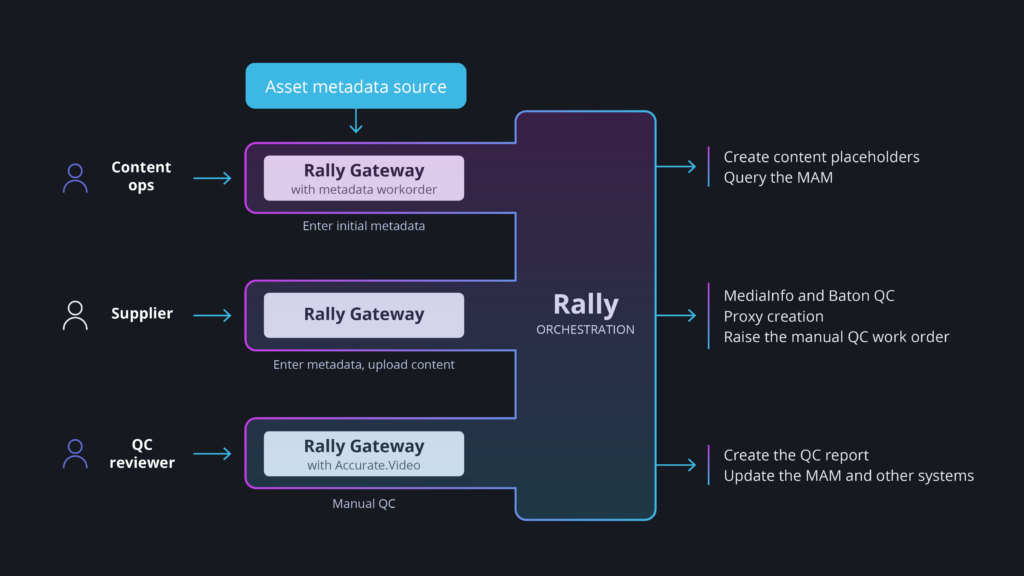
Working with RTL, we designed a media supply chain that consolidates six systems into three, with SDVI Rally orchestrating the middle. RTL kept their editorial source of truth and their media asset management system, and Rally now integrates with both via their APIs, importing content records by season or title and writing results back as work progresses. Everything between those two endpoints is a Rally supply chain: pick the correct analysis template for the content type, run MediaInfo and Interra Baton QC, generate the proxy, create the manual QC work order, assemble the QC report, and notify the supplier. What makes the deployment distinctive is that RTL did not put all of this behind one screen. They built Rally Gateway portals designed for the role that is doing the work, including one for content operations, one for quality control, and the rest for suppliers grouped by content type. Each portal presents only the content and the fields that that role needs. Conditional form logic means that, when an operator enters one value, it determines which fields appear next. Filtered inventory tabs mean an operator looking for a QC report is not scrolling past every file on the asset. The people who specified these designs came from the Content Operations and QC teams themselves, and it shows.
 Supplier self-service is where the change is most visible day to day. Every internal and external supplier connects to a single portal per content category, and Rally tag permissions tie what each supplier sees to the content assigned to them. Suppliers submit technical and editorial metadata against placeholders that content operations created in advance, including time-coded segmentation, proposed ad break markers, and suggested positions for secondary events. They upload the file against the placeholder, or deliver in bulk, in which case Rally reconciles the files to content records by file name. When a delivery fails, the supplier opens the failed deliveries view and reads the rejection reason, the operator comment, and the QC report all on the same page, then re-delivers. RTL went further and published technical specifications and Rally usage guides on the portals’ own support pages, so a supplier unsure of an audio layout can check it without contacting anyone. They also write release notes for their own supply chains and publish those to their users. None of that requires a phone call, and none of it requires an RTL operator to answer one.
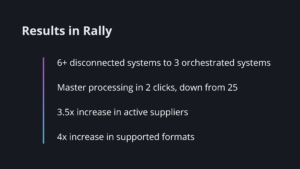
On the QC side, the supply chain, rather than the reviewer, determines the work required. Based on content type, quality requirements, format, and deadline, it selects the review depth (an essential quick check or a full in-depth pass), routes the work order to the matching queue, and chooses the tool: Accurate.Video Validate for web-based review, Rally Access for a detailed pass inside Adobe Premiere Pro, or the Rally Preview Player for fast editorial confirmation that the delivered file matches the title on record. Broadcast date and deadline values carried in the supply chain drive the urgent priority queue. Reviewers can flag a file for expert review and push it back into a senior queue when a call is not obvious. Reference checks recorded against the first episodes of a season establish what normal looks like for content that have specific aesthetics by design. The operational result according to RTL: processing a master version took more than 25 mouse clicks before Rally and takes 2 now, and the time from file delivery to manual QC for a 45-minute program dropped from as much as two days to about one hour.
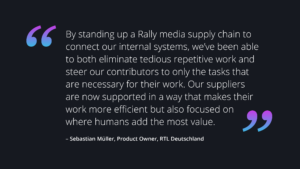
That efficiency made growth possible. Over four quarters, suppliers working in Rally are up from 12 to 41, 16 supported content formats are up to 62, configured Gateways are up from 6 to 9. RTL wanted seven optimized workflows for externally produced content: they went from having only two completed to now having all seven. Four more are now scoped for licensed content. RTL treats their Rally configuration like a software product, with a roadmap, release notes, and documentation – a best-practice for Ops teams across the industry. The click count and the turnaround time are real, but they are downstream of a simpler decision: Put a strong orchestration layer between the systems you keep and you give every group of people who touch the content a workspace tailored to their job function.
—
Key takeaways
- Consolidating six disconnected in-house systems onto three, Rally orchestrates activity between the editorial source of truth and the media asset management system, removing repeated manual metadata entry that previously defined the process.
- Steps to process a master version dropped from more than 25 mouse clicks to 2, and turnaround from file delivery to manual QC for a 45-minute program fell from up to two days to roughly one hour.
- Rally Gateway portals give content operations, QC, and suppliers customized screens scoped to their own work, with tag-based permissions providing each supplier with only the content assigned to them.
- Suppliers read rejection reasons and QC reports and re-deliver without RTL operational support, and the technical specifications they need are published into the portal alongside the task.
- Rally supply chains select QC depth and QC tool per delivery, across Accurate.Video Validate, Rally Access in Adobe Premiere Pro, and the Rally Preview Player, and route work into priority queues based on broadcast date, deadline and editorial value.
- The operation scaled on that foundation – from 12 to 41 active suppliers and from 16 to 62 supported content formats – across four fiscal quarters.
—
Looking to take the disjointed, manual steps out of your media supply chain? Contact us to talk about how Rally can help streamline your operations.