Industry consolidations, margin pressures, and the push to do more with fewer resources are just some of the forces making media operations more complicated and difficult. In the face of these pressures, many are loath to undertake any transformational projects, and even decisions about technology refreshes are delayed. When everything feels uncertain, standing still can feel like the safest choice. But in today’s highly competitive and fast-changing marketplace, maintaining the status quo could end up costing more.
Reassessing the Status Quo
Look at the tech stack for the media supply chain. It may be tempting to simply renew existing technology licenses or support contracts. But by not taking a more strategic step that embraces cloud-enabled orchestration and automation, media organizations remain tied to constraints that work against growth and profitability.
When workflows remain manual, fragmented, or overly rigid, the impact shows up in subtle but persistent ways. New licensing or distribution opportunities take longer to fulfill or are missed altogether. Teams spend time on repetitive, low-value tasks that could be automated. Operational inefficiencies accumulate through duplicated work, reprocessing, and unnecessary handoffs. And when the business asks for something new, whether it’s a new channel, a new market, or a new format, the organization struggles to respond quickly.
Individually, these issues can seem manageable. Collectively, they can erode profitability, agility, and confidence. Over time, the cost of not changing often exceeds the cost of making a move. For organizations at this decision point, even a small step toward modernization can bring transformational gains in efficiency and agility.
Overcoming the ‘Do Nothing’ Default
Budget, technology, or even risk tolerance might seem like top obstacles to broader thinking about supply chain modernization. But more often than not, inaction is the real barrier. Forward momentum stalls out when rethinking the media supply chain sounds like a massive, high-risk project. Understandably, maintaining the status quo — and hoping it will be good enough for a little longer — can seem like the better choice.
In my previous blog post, I encouraged media organizations to think more strategically — and possibly more boldly — when faced with a technology refresh. But let’s be clear: Taking action doesn’t necessarily mean committing to a sweeping, multi-year transformation. Change can be evolutionary rather than revolutionary, with incremental steps introducing valuable efficiencies that compound over time. In fact, many of the successful supply chain modernization projects we see have started with a single well-chosen step.
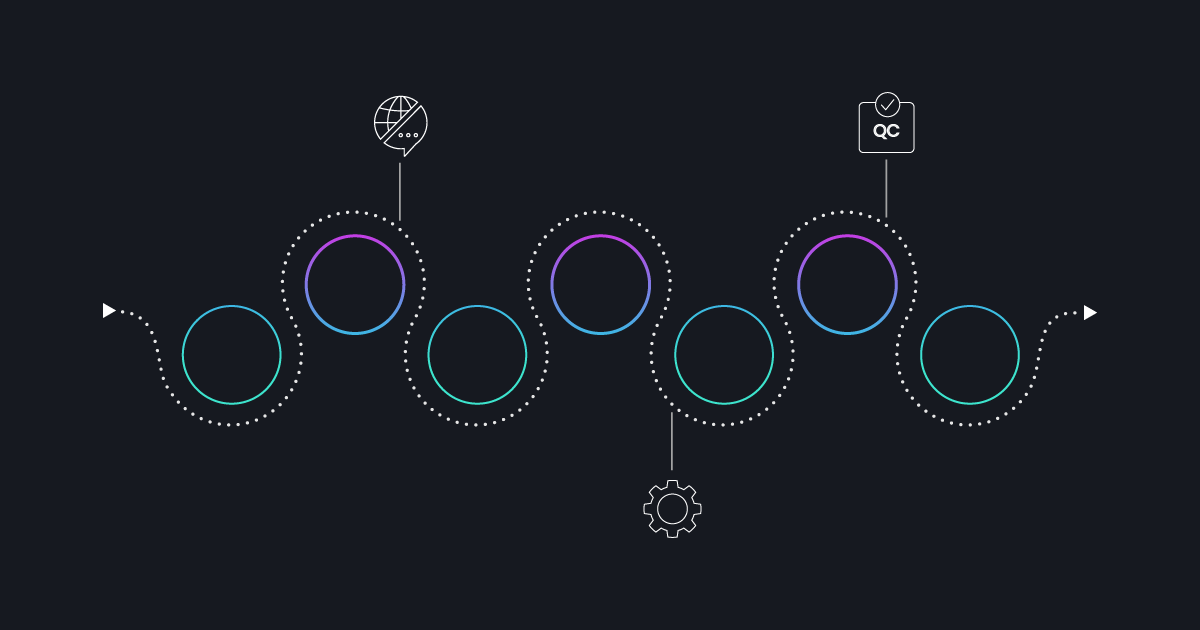
Whether the starting point is ingest, localization, or a specific distribution process, orchestration and automation can bring real operational benefits quickly, without incurring unnecessary risk. Over time, you can extend supply chain optimization by adding another workflow, then another, and another. You can effectively transform your media supply chain operations without taking on a large-scale, all-encompassing modernization project.
The key is to begin with one workflow, one pain point, or one place where inefficiency is clearly costing the organization time, money, or opportunity. In addressing one particular pain point, you not only solve an immediate problem but also lower barriers to further optimization. Once content is in the cloud and managed within a platform like Rally, much of the heavy lifting is already done. Metadata is captured. Assets are visible. Processes are orchestrated. So, when it’s time to tackle the next workflow, part of that project is already done. As you move forward with incremental optimization, value compounds while the work required to unlock that value decreases.
Again, we’ve seen this play out repeatedly with Rally users. Hearst Networks, for example, began by transforming ingest and reducing manual touches by roughly 75 percent. From there, the company expanded into localization, then into a more flexible, pull-based fulfillment model. Each step built on the last, and each required less incremental effort than the one before it.
Taking the First Step
Change can be daunting, especially when it involves the media supply chain at the center of your operations. But doing nothing is still a decision, and it’s one that carries real cost.
Once media organizations take their first step, even a small one, toward supply chain modernization, they see benefits that drive confidence in further change. Delivering greater efficiency and agility, transformation starts to feel less like a risky leap and more like a series of manageable, logical moves.
In working with prospective and new Rally users, we often assist in identifying a logical flow based on top priorities for optimization. We work closely with experienced deployment partners who know how to get projects moving quickly and pragmatically. And we connect Rally users with peers — through our Rally Together community and direct user-to-user conversations — so they can learn from others who’ve already taken this journey.
If you’re ready to explore what your first step toward media supply chain modernization could look like, just get in touch! We’d be happy to talk through the possibilities.