Virtual product placement turns finished content into new ad inventory. It is a post-production process that integrates brand placements directly into scenes — a billboard added to the side of a building, a branded package on a kitchen counter — and it lets content owners monetize episodes long after delivery. The catch is upstream: before any placement can be sold or integrated, someone has to find the eligible moments, and reviewing entire series by eye does not scale. A European broadcaster with a sizeable content library asked what AI could do to get more mileage out of that library. In response, with our deployment partners at netorium, we built a proof of concept that analyzes scenes in advance and hands their team a validated list of placement-ready spots.
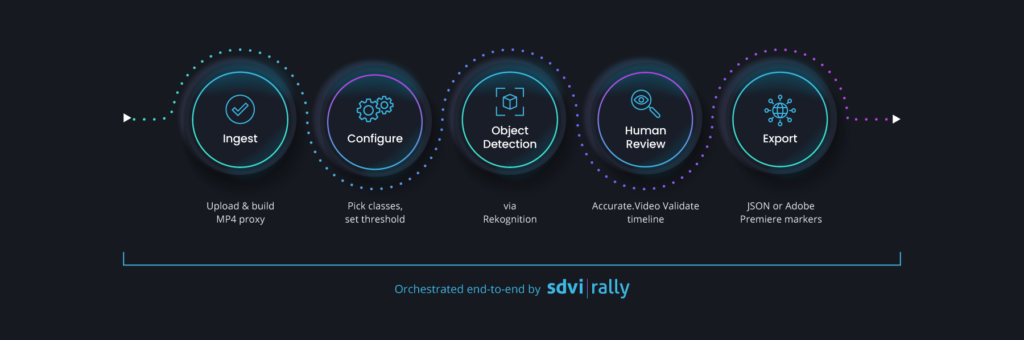
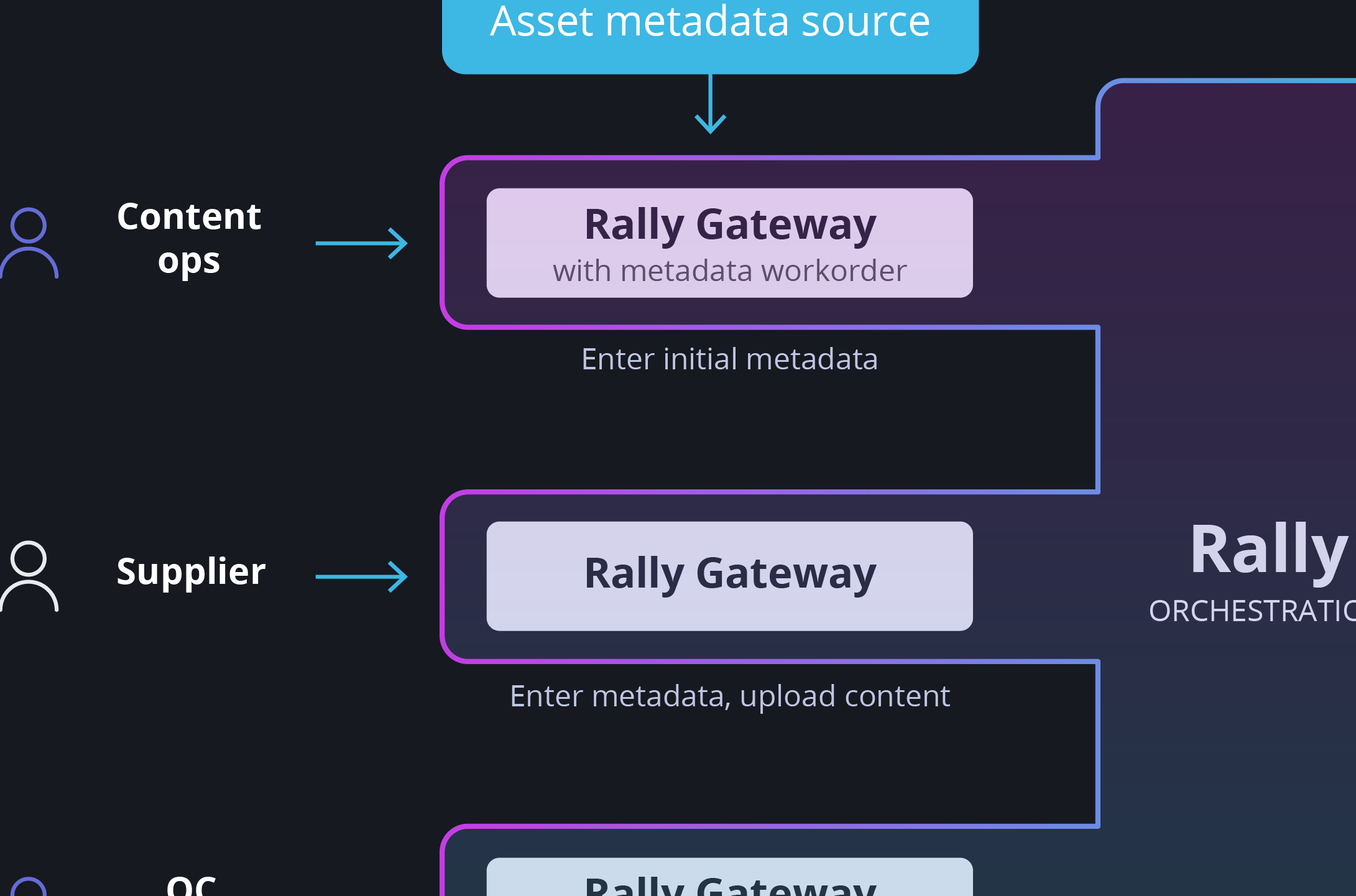
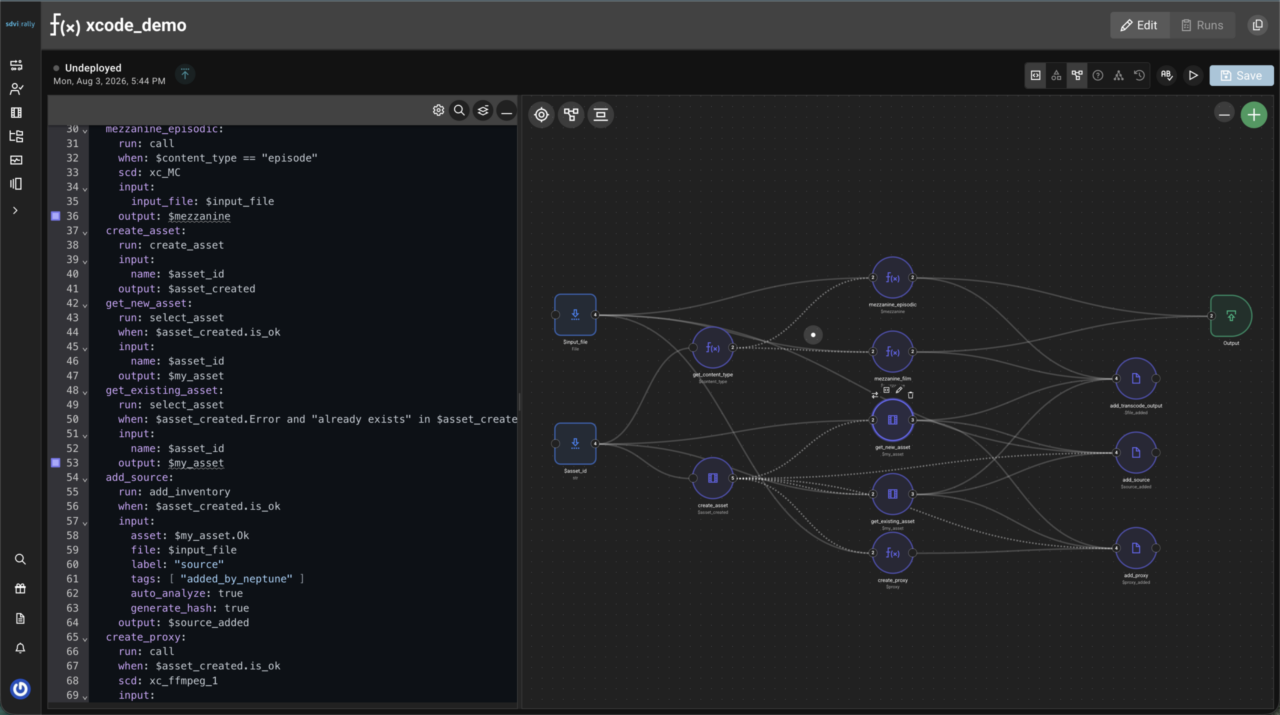
The supply chain runs as a sequence of orchestrated steps in SDVI Rally, presented to the team through a purpose-built Rally Gateway page with sections for upload, contextual analysis, manual review, and results download. Ingest is standard Rally work: files are uploaded, content is registered, and an MP4 proxy is created for review. The team then selects which object classes to look for — a kitchen counter, a bar, a table, the side of a building, a bus — and sets the confidence threshold for detection. Rally runs the analysis job through AWS Rekognition, operating as an application service in the workflow, and when detection completes, Rally automatically creates a work order carrying the results into Codemill’s Accurate.Video Validate for human review. Rally orchestrates each hop; the detection and the review interface are delegated to best-of-breed application services.
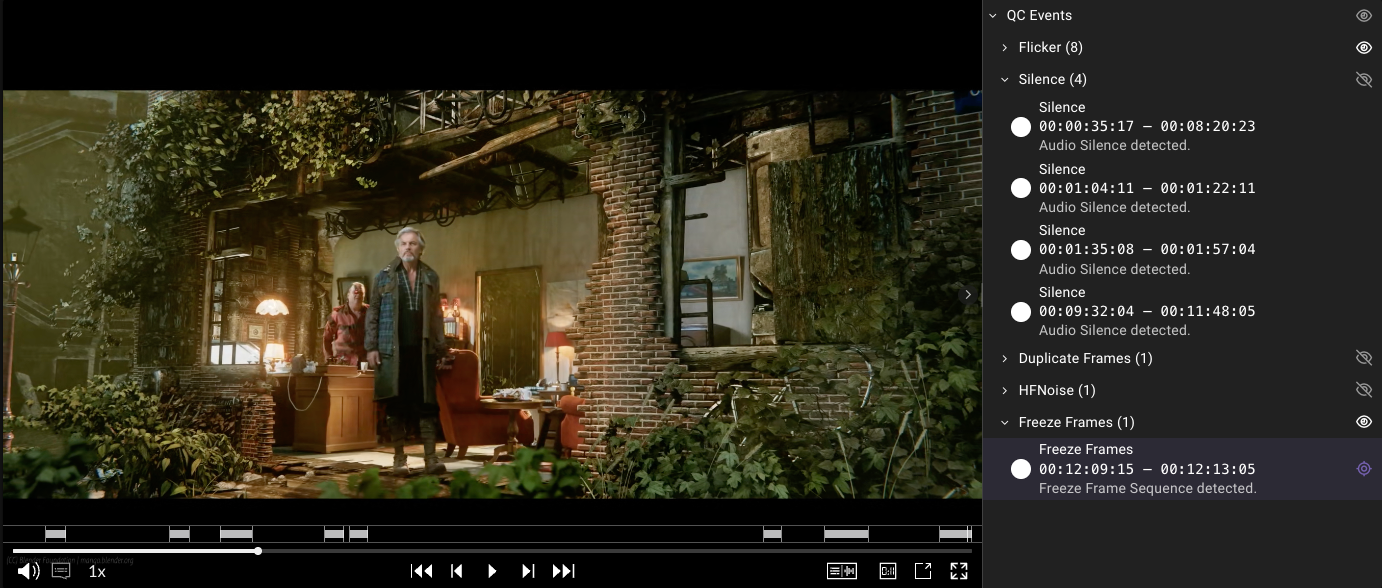
The review step is where AI output becomes a usable deliverable. Accurate.Video Validate presents the detected objects on a timeline against the proxy, so an operator sees exactly where a bus, a table, or a clear wall surface appears, scrubs to the moment, and decides which candidates to keep. The AI proposes opportunities broadly at whatever confidence level the team has configured; the human keeps only the spots that are editorially and commercially credible. That division of labor matters in this domain because placement eligibility is a judgment call about the scene, not just an object detection score.
The output is built for handoff. Once the work order is completed, the post-production partner responsible for product replacement downloads a human-readable JSON file listing each validated object with its timecodes and durations, so the integration work starts from a curated shot list rather than from raw episodes. The same results could also be submitted as markers in an Adobe Premiere project, letting editors jump straight to each eligible scene instead of hunting for it. Between the JSON export and the marker path, the analysis meets both the post-production partner’s workflow and the in-house editorial workflow where they already live.
 What makes this concept really impactful is how little of it is bespoke. Object detection is one application service in a Rally supply chain that already handles ingest, proxy creation, work orders, and delivery, which means the detection model can be swapped or supplemented as new capabilities become available, the object list can grow to whatever a sales team can sell against, and the same pattern extends to other scene intelligence tasks. For any organization sitting on a deep library and watching virtual product placement mature, the message of this proof of concept is that the preparation problem is already solvable with the supply chain they have.
Key takeaways
- The proof of concept analyzes scenes in advance, so a broadcaster’s team gets a validated list of placement-eligible spots instead of reviewing episodes manually.
- Rally orchestrates the flow, ingest and proxy creation, AWS Rekognition detection, and work order review in Accurate.Video Validate through a purpose-built Rally Gateway page.
- Operators choose the object classes and confidence threshold, then keep or discard each detected candidate on a frame-accurate timeline.
- Results export as human readable JSON with objects, timecodes, and durations, with a path to Adobe Premiere project markers for editors.
- The detection model is one swappable application service, so the same supply chain pattern extends to new models and new scene intelligence use cases.
—
Looking for creative ways to integrate AI detection into your workflows? Contact us to start the conversation.