We’re only a couple weeks away from IBC, where AI will undoubtedly be one of the most visible themes. Across the show floor, we’ll see tools that use AI to analyze content, generate metadata, tackle localization tasks, and perform other specialized functions.
I wrote last month about the importance of agility in testing and deploying such tools within a media supply chain. But lately I’ve also been thinking about a larger question: What happens when AI begins operating not just within individual tasks, but across the supply chain?
No one has a complete answer to that question yet. But SDVI customers working with our Rally media supply chain management platform have asked us to facilitate conversations among media leaders so they can compare notes. What are people trying? What’s working? What isn’t?
Though we’re still in an exploratory phase, it’s becoming clear that AI has the potential to deliver far more than the significant efficiency gains that come from automating and accelerating individual tasks. For one, it enables a fundamental shift from input-driven to outcome-driven operations. Rather than define the tools, resources, and sequence of steps required to complete each job, teams can instead specify the result they need and rely on AI to determine the best way to deliver it. What’s more, with AI synthesizing information from across the business, teams can surface new content opportunities and sources of revenue that might otherwise remain hidden.
Replacing Predefined Workflows With Supply Chains on Demand
Operations teams typically construct supply chains by specifying the steps and applications required for one type of job, then creating additional workflows to handle other variations. As a result — to accommodate different inputs, outputs, customers, and delivery requirements — a large organization may build and maintain dozens of supply chains.
In the emerging AI-driven, outcome-based model, however, organizations don’t necessarily define every step within a supply chain — or supply chains for every eventuality. Instead, operators describe what they need as an output, and AI takes on responsibility for evaluating available inputs, choosing the necessary functions, identifying the required resources, highlighting any gaps or missing resources, and assembling a supply chain for that job. For each supply chain, Rally provisions the infrastructure and tools needed to complete the work, releasing them as soon as the job is done.
AI interprets the requirement while Rally executes the necessary work. This approach effectively enables media organizations to build supply chains on demand. And with this capacity, they can fulfill deals faster, respond more readily to changing or one-off requirements, and pursue larger or more complex opportunities without operational capacity becoming a constraint.
Consider, for example, what typically follows from the signing of a new distribution agreement. Personnel across the organization may need to interpret the contract, determine which rights apply, identify territories and languages, locate the appropriate content, and define all the work needed to prepare it for delivery. Now this busywork can be handed off to AI.
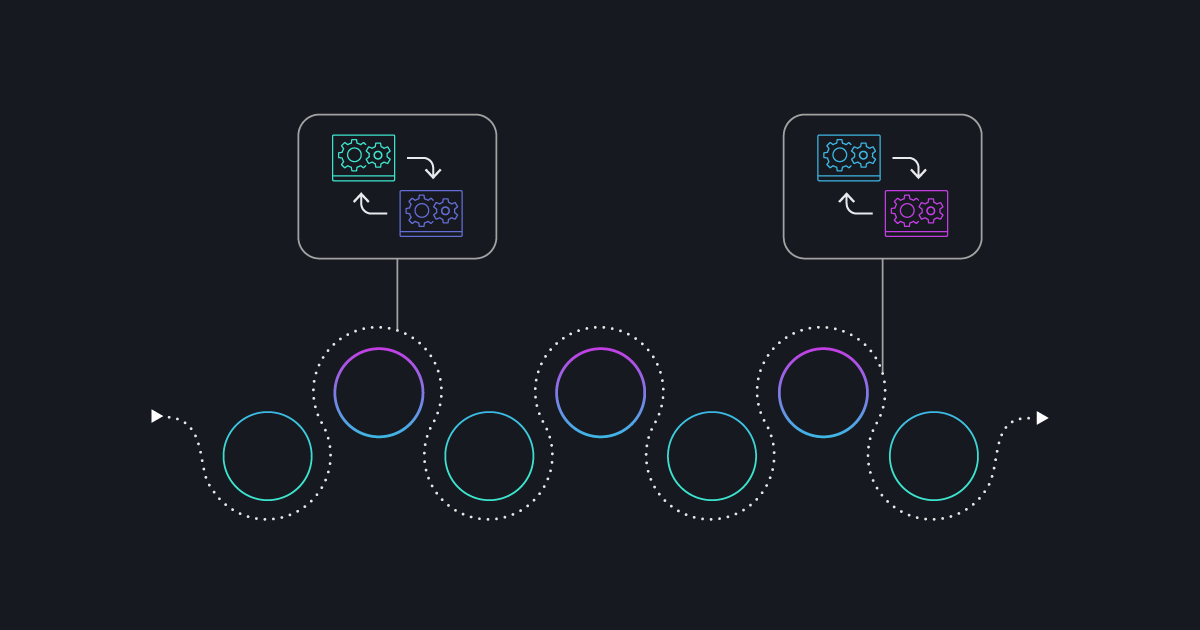
 Reading a new agreement, AI can identify the titles involved, the territories where distribution is allowed, the language versions required, and the specifications for each destination. Synthesizing this information into an analysis for human approval, the AI system allows operators to focus on review and decision-making. With approval granted, AI moves forward in building a supply chain that can be executed to yield the appropriate output. A complex series of processes thus becomes a smooth, continuous path from business agreement to delivered content.
What does this mean for the people doing the work? AI isn’t replacing media operations teams any more than cloud automation did a decade ago. It reduces mechanical, repetitive work and frees people to operate at a higher level: spotting opportunities, making judgment calls, and shaping strategy instead of executing steps. While the tools change, the need for human discernment and direction remains.
Operations as Business Enabler
Within media organizations, operations has long been viewed as a cost center. The sales team completes a deal, and operations then must find a way to fulfill it on time and within budget.
Continual efficiency improvements have been vital to reducing the cost of execution, and investment in supply chain modernization — enabled by cloud infrastructure, orchestration, and automation — has made it possible to distribute more content, create more versions, reach more territories, and support more endpoints without a proportional increase in cost or labor.
All these gains allow for faster and more cost-effective fulfillment. A+E Global Media’s supply chain modernization project offers a great real-world example. The company’s operations team leveraged the Rally platform to realize exponential efficiency gains, and as a result, the company’s sales teams can pursue bigger deals, more frequently. That’s a big win for operations and for the organization as a whole.
For all variety of media organizations, the application of AI across media workflows may have an equally significant impact, transforming operations from a cost center to a business enabler.
Using AI to analyze operational data along with audience and commercial information, operations teams are gaining new insight into potential business opportunities. They can, for example, employ AI to compare audience behavior in a particular market with language demand, territorial rights, library contents, and fulfillment costs. And this analysis might reveal that a title already in the archive could generate meaningful revenue if the company created, for example, a Romanian-language version. With a deeper understanding of how and where operational capacity can best be applied, operations teams can both identify profitable deals and execute on them.
Turning AI’s Potential Into Practice
Just as advances in cloud infrastructure enabled the development of our Rally platform — and the industry’s move toward supply chain modernization — the ongoing evolution of AI will reshape media operations. At SDVI, we are working to ensure that Rally is ready to help users take full advantage of AI-driven systems in ways that suit their technical and business goals. Listening to our customers’ questions and learning from their experiences is a big part of that effort.
From the earliest days of cloud-based media supply chains, SDVI has facilitated events and created communities in which Rally users can learn from one another. In addressing the potential and risks of AI, we’re continuing that tradition. By exploring these questions together, we can move forward in seizing new opportunities — and do so wisely.
If you’re thinking about how AI could reshape your supply chain and want to compare notes with peers working through the same questions, stop by SDVI stand 5.F88 at IBC, or get in touch. We’d love to bring you into the conversation.