update March 2026
At NAB, Let’s Build What’s Next
As we head to Las Vegas, one thing is crystal clear: the demands on modern media businesses aren’t letting up — more content, more channels, more markets, tighter budgets. SDVI will be at booth W1553 in the West Hall, ready to talk about how we can help media operations teams move faster, work smarter, and stay competitive in a landscape that doesn’t stand still.
A big part of that story this year is the Rally Application Service ecosystem. Our partners bring some of the most innovative technology in the industry directly into your supply chain workflows, giving teams powerful new tools without the complexity of building and managing them from scratch. This year’s highlights include:
- ElevenLabs AI-powered audio translation
- Vionlabs ad break detection
- Accurate.Video for subtitle corrections
- Spectra for accessing hybrid storage
More on these in the Rally section below.
Whether you’re looking for a better way of operating, catching up on what’s new in Rally, or a technology partner looking to collaborate, we’d love to connect at NAB.
Supply Chain Thinking
Comparing Supply Chain Platforms? Make Sure It’s Apples to Apples.

Geoff Stedman, Chief Marketing Officer
We’ve talked before about how tightly integrated orchestration and resource management eliminates the operational overhead that media companies would otherwise have to handle themselves. There’s been a lot of discussion in the industry recently about the cost of software, cloud usage, and whether it’s becoming easier (or cheaper) to build and run things yourself.
Some of those perspectives are compelling, particularly when they highlight how different architectural approaches can produce very different-looking bills, but not all costs are visible, and not all value shows up in the same place.
Last month I wrote about how maintaining the status quo across media operations can wind up costing more than a strategic shift toward cloud-enabled orchestration and automation of the media supply chain. By standing still, organizations will compromise agility, efficiency, and opportunity over time. They know, intuitively, that their supply chains are too manual, too fragmented, and too slow to adapt. So how do you turn that intuition into a persuasive business case for moving forward with media supply chain transformation?
While “transformation” may seem to suggest a massive, all-at-once shift, the reality is that some of the strongest business cases start with a single workflow and a surprisingly simple set of measurements.
In the blog, we provide a framework for quantifying the costs of your current workflow and value you can get from a modern media supply chain.
When media organizations evaluate their supply chain management options, they will start with what’s easy to measure: software fees, cloud consumption, and infrastructure costs. What about the infrastructure that has to be provisioned, systems that need to be integrated, and processes that have to be maintained? How are you provisioning compute, storage, and networking resources, scaling infrastructure up and down, updating and maintaining the overall system? Overprovisioned capacity doesn’t appear on any invoice, but can become very real over time.
In the blog, we examine the full cost of running a media supply chain, ensuring that it allows you to build new offerings, add distribution channels, or respond to new opportunities. It should always be an enabler, never a bottleneck.
From Our Technical Solutions Team:
Agility Starts With Operational Flexibility
As a cynical Brit, I’ve always been slightly uncomfortable the approach to business transformation that says you should “fail fast and break things” – particularly when you’re responsible for building software that is key to customers’ operational success. In the context of a media supply chain, breaking things means disruption to deadlines, unhappy customers, and ultimately, missed revenue.
However, real value can come from a process that allows development teams to learn quickly and deliver to customers the features they need when they’re needed. For SDVI’s business, that’s where an agile approach with a regular, 2-week release cycle has proven invaluable. Rather than stockpiling features and fixes, we can deliver improvements steadily and predictably.
There’s also an operational advantage to an agile process that sometimes gets overlooked: smaller, more frequent, “rhythmical” releases are typically less disruptive than large, infrequent ones. They actually foster a “DevOps” mindset, helping SDVI customers think of their media supply chain as a constantly-evolving entity, rather than a “one and done” deployment.
In the blog, we look at how, over time, that rhythm of listening, building, and releasing keeps SDVI and our customers aligned and ensures our platform supports the fast-moving demands of the modern media supply chain – without breaking things.
New in Rally
See the Latest in Rally at NAB 2026

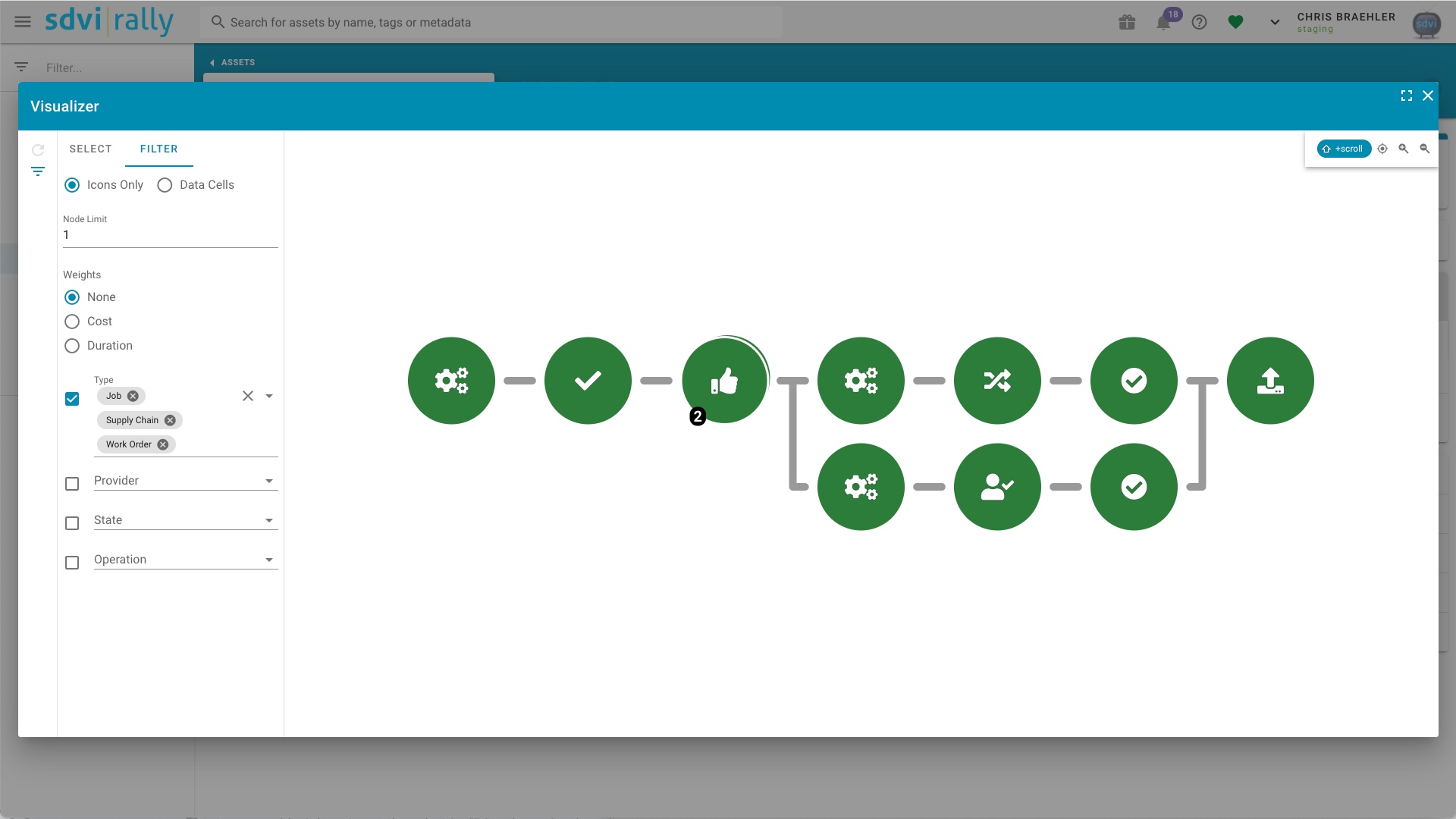
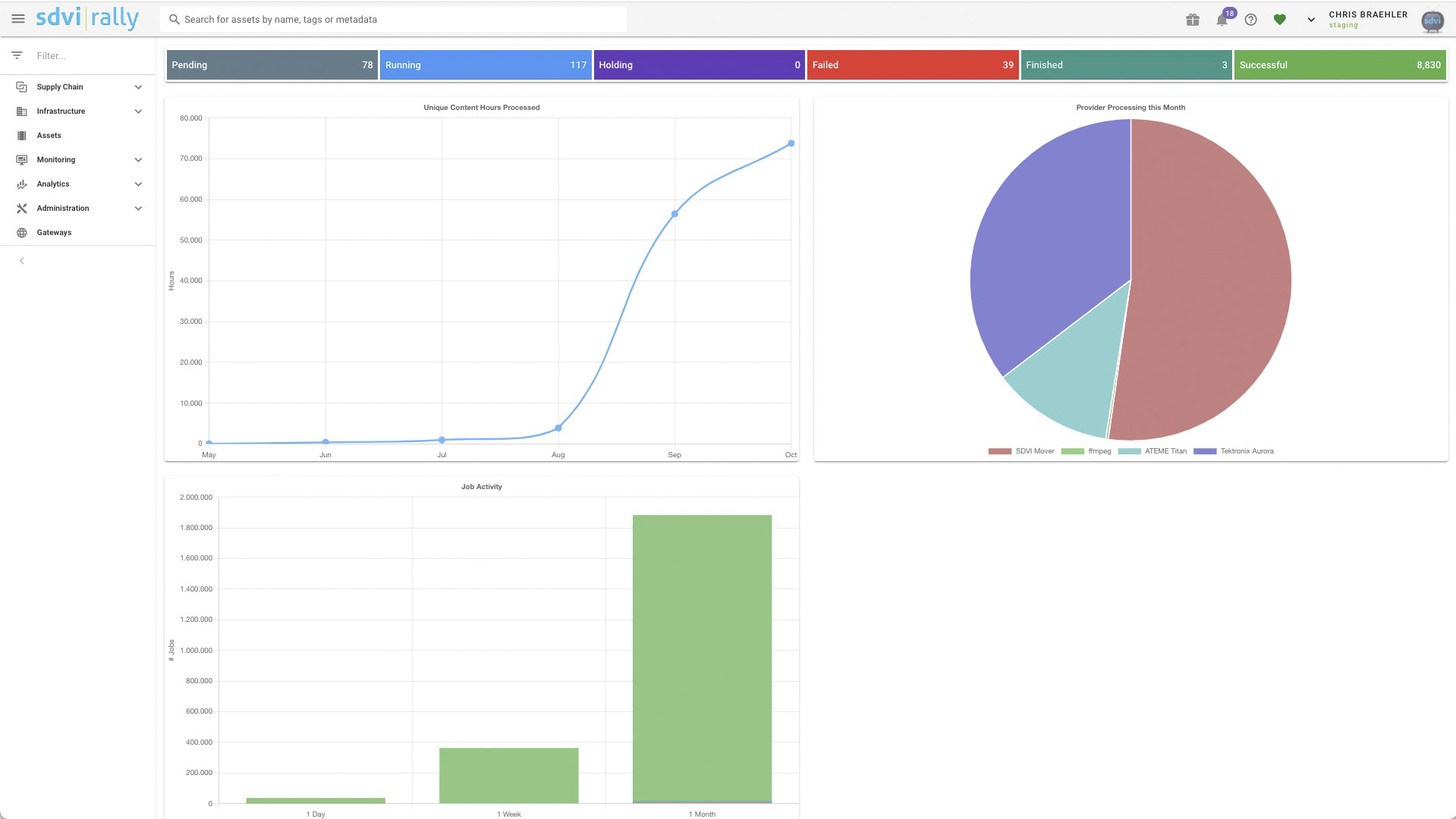
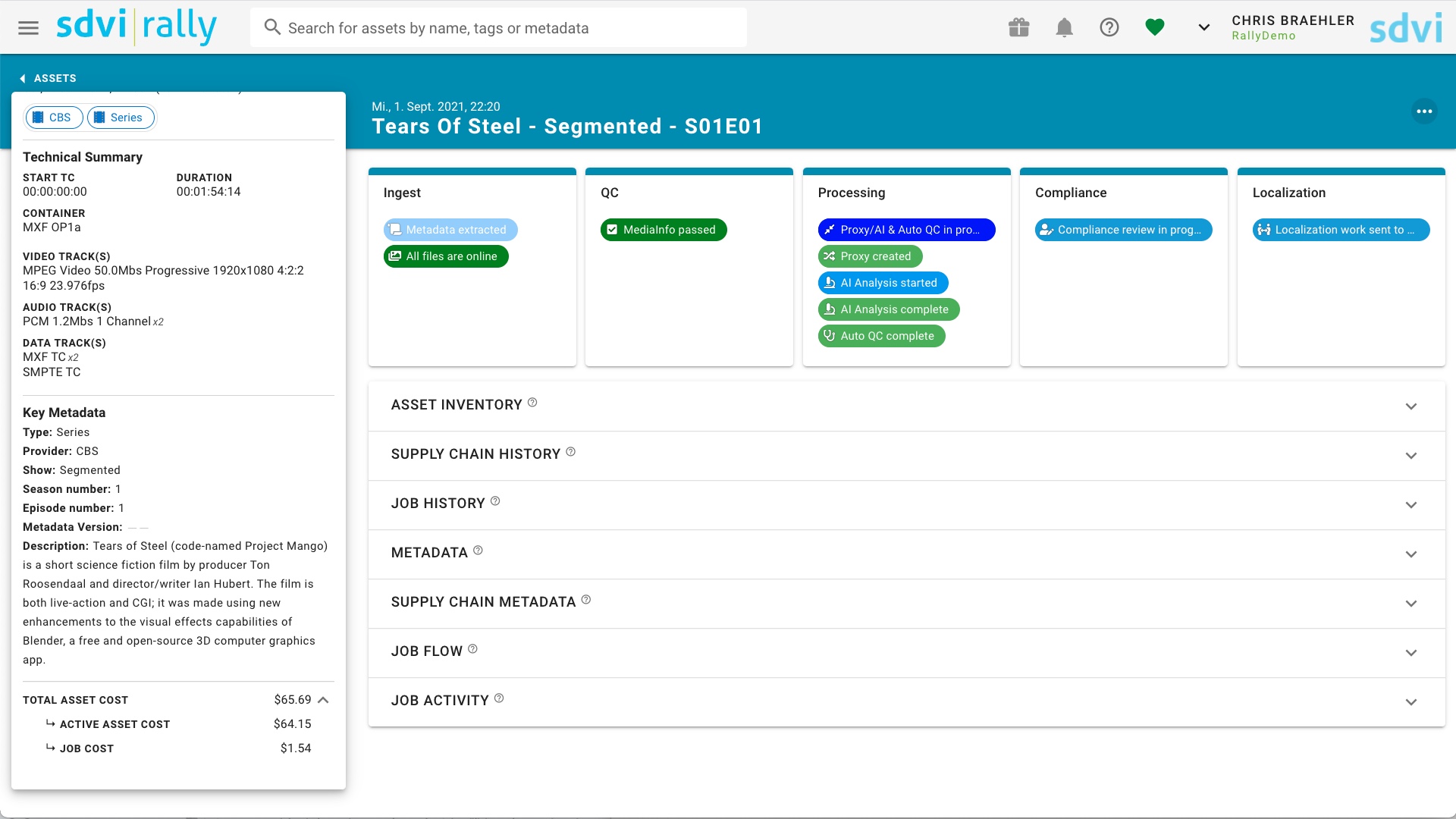
From content receipt and verification, to content processing and localization, to content packaging and distribution, Rally is designed to meet the demands of a highly competitive media environment.
At the 2026 NAB Show, we’ll be showcasing Rally solutions for the biggest supply chain challenges, including:
- Content packaging and distribution – Rally Connect automates packaging, format conversion, and delivery to OTT platforms, MVPDs, and other common VOD endpoints, dramatically streamlining content distribution.
- Subtitle and Caption Corrections – the Rally and Accurate.Video Subtitle integration provides a browser-based editor for frame-accurate review and correction of timing, placement, and errors in subtitles and captions, directly within the Rally workflow.
- Ad Break Detection – Rally’s integration with Vionlabs leverages AI analysis of content structure and scene characteristics to automatically suggest optimal ad insertion points, reducing the time teams spend identifying and creating ad breaks.
- Audio Translation – the Rally and ElevenLabs integration delivers AI-powered audio translation with natural-sounding dubbed tracks in multiple languages, preserving the timing and tone of the original performance through voice synthesis.
- Hybrid Storage Support – Rally’s integration with Spectra Vail allows users to source content from Vail-managed on-premises or cloud storage, enabling the benefits of cloud-based media supply chains without abandoning existing on-premises infrastructure.
Rally is designed to help your media supply chain to do more, providing agility, scalability, efficiency, and integrations that empower you to build what’s next. If you’re at NAB, visit us in the West Hall, booth #W1553, to see how we can help.

Partner Spotlight
BATON Captions
TMT Insights is a global professional services and software development company delivering media content management, cloud technology, and SaaS/D2C experiences to content creators, distributors, and broadcasters.
Customers like Crunchyroll, National Geographic Channel, Sky, and PBS have leveraged the implementation and professional services expertise of TMT Insights to accelerate integration and deployment of the SDVI Rally media supply chain platform.
TMT embraces the power of collaboration and works with SDVI and its customers to drive greater efficiency, agility, and value. Our joint program, the Supply Chain Accelerator, enables media companies to fast-track the migration of their media operations to a modern, cloud-based model by combining pre-configured versions of the SDVI Rally media supply chain platform and the TMT Insights Polaris operational management platform, along with supporting professional services, to accelerate time-to-production.
Learn more about how, together, SDVI and TMT Insights can accelerate modernization of your media supply chain.

Upcoming Events
March 11 – 12
DPP European Broadcaster Summit
Paris